THE BEAUTIFUL GAME
Ben Black on Tennis, Motion Design and the Perfect Forehand
Words: Julian Cirrone | Images: Ben Black | 13.10.26
Ben Black is a motion designer and director at Future Deluxe, a creative studio working across design, technology and moving image. His work spans motion design and CGI, with a particular interest in movement, form and exploring visual ideas through interaction.
For Future Play, Future Deluxe’s space for self-initiated experimentation, Ben turned that interest towards tennis. After being told his own forehand technique was wrong, he became fascinated by the mechanics of the professional swing, and whether technology could make something that happens in a fraction of a second easier to understand.
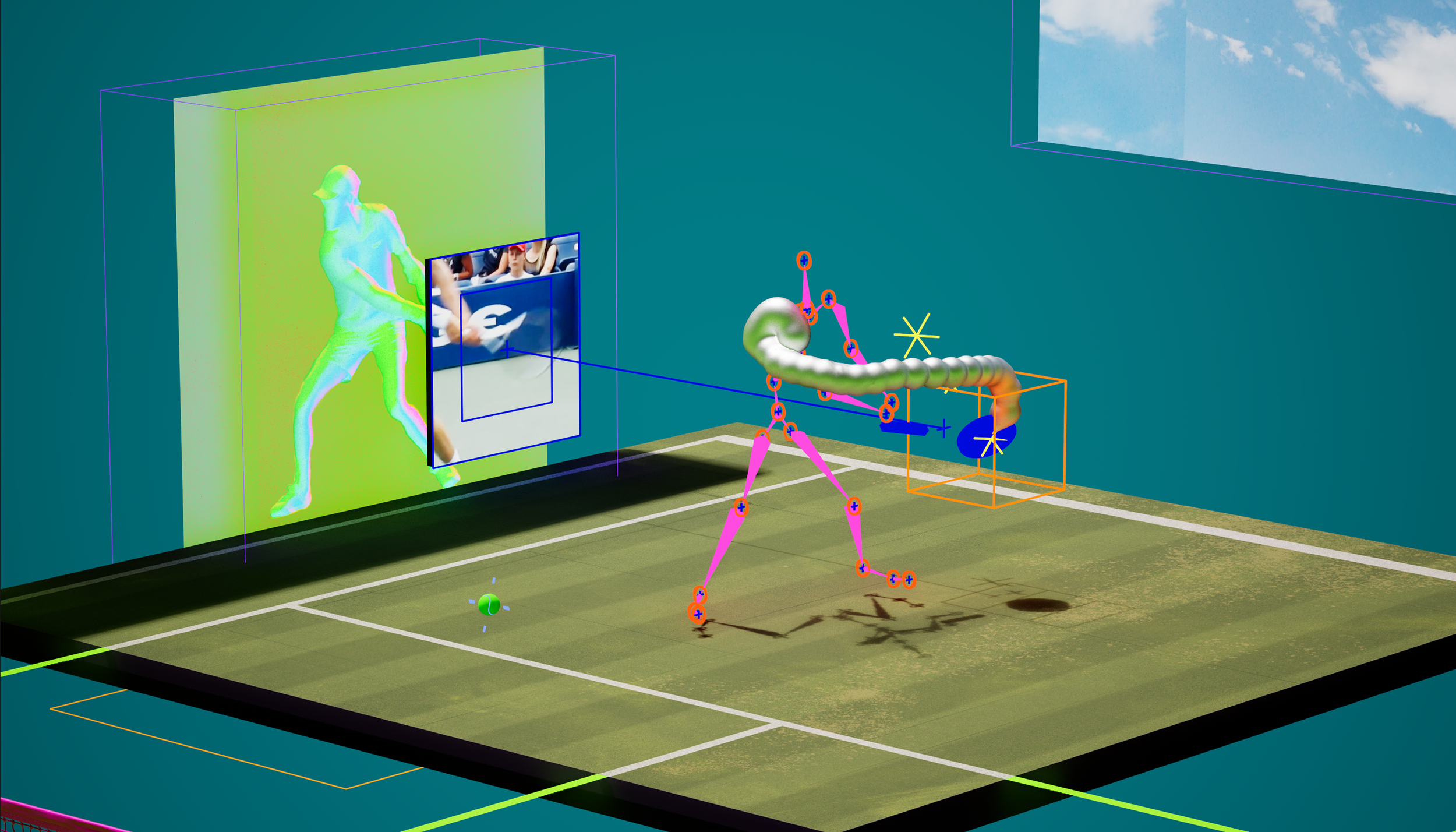
Using AI motion capture and Unreal Engine, he began turning professional tennis footage into 3D movements that could be viewed from any angle. We spoke to Ben about muscle memory, comparing Sinner’s forehand to Medvedev’s, and what happens when you stop watching the ball and start watching the player.
How did it come about?
I started learning tennis a couple of years ago. I had a few introductory lessons, played for a while, then went back for some more coaching and was told that my forehand technique was basically all wrong, despite it feeling completely natural to me.
Around the same time, I read The Inner Game of Tennis, which talks a lot about developing muscle memory so that eventually you stop consciously thinking about your technique when you play.
That created a bit of a paradox for me. If you need to hit thousands of balls to build muscle memory, but your technique is wrong, aren't you just getting really good at doing the wrong thing?
That made me slightly obsessed with understanding the mechanics of a forehand. I started watching loads of YouTube tutorials explaining the different stages of the swing. The problem was that there seemed to be a lot of contradictory or confusing advice, especially when just starting out.
I found myself in my office at home one day, desperately swinging at a TopSpin Pro, thinking about my forehand and constantly asking myself: Is this right? Is that right?
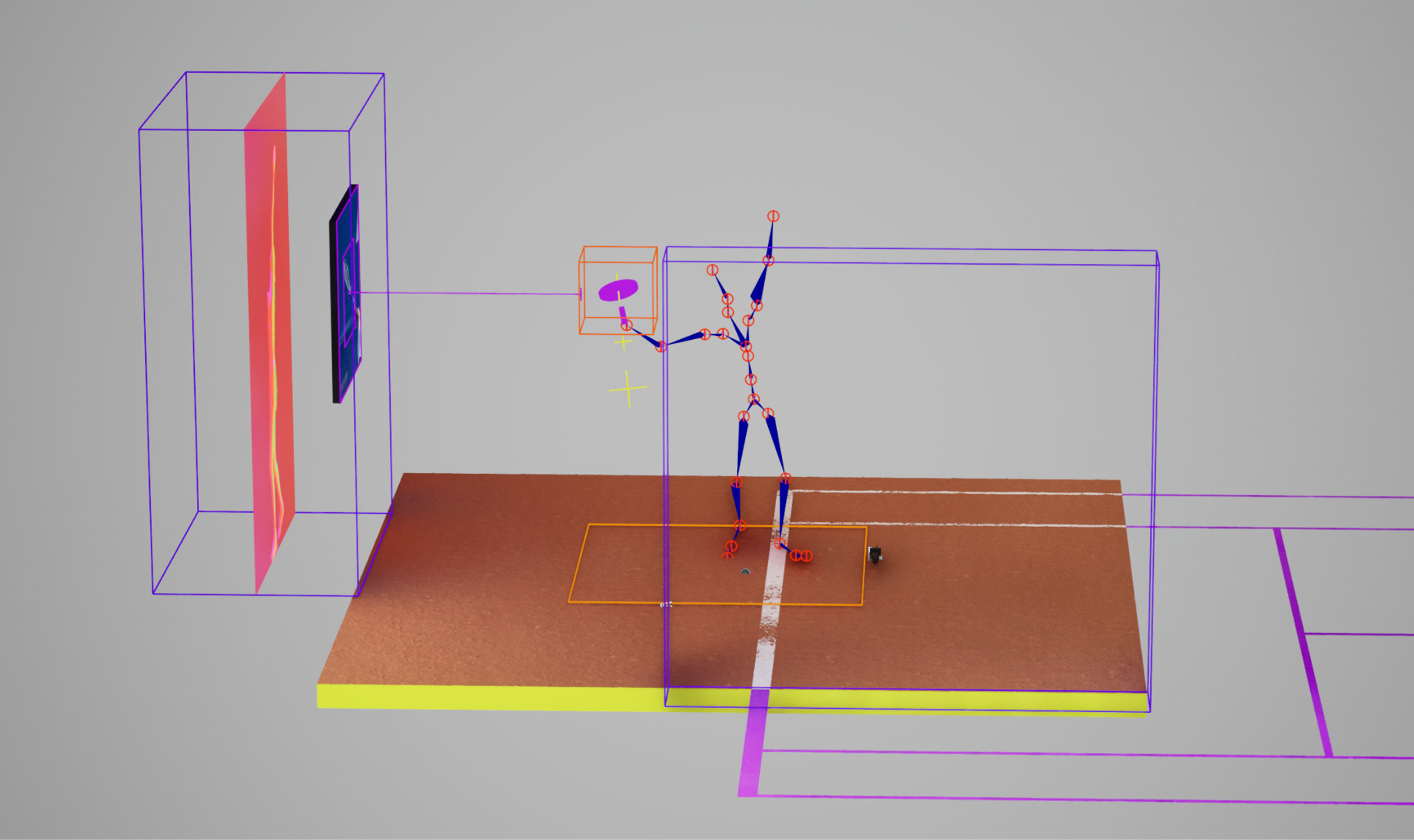
At the same time, I'd been looking into AI motion capture for a project at work. Traditionally, motion capture involves someone wearing a suit covered in sensors (think Andy Serkis as Golem), but AI can now analyse ordinary video footage and extract a digital skeleton that copies the movement of the performer.
I realised I could potentially use that technology to do something I'd been struggling with: actually see and understand the mechanics of a tennis swing.
What were you hoping to achieve?
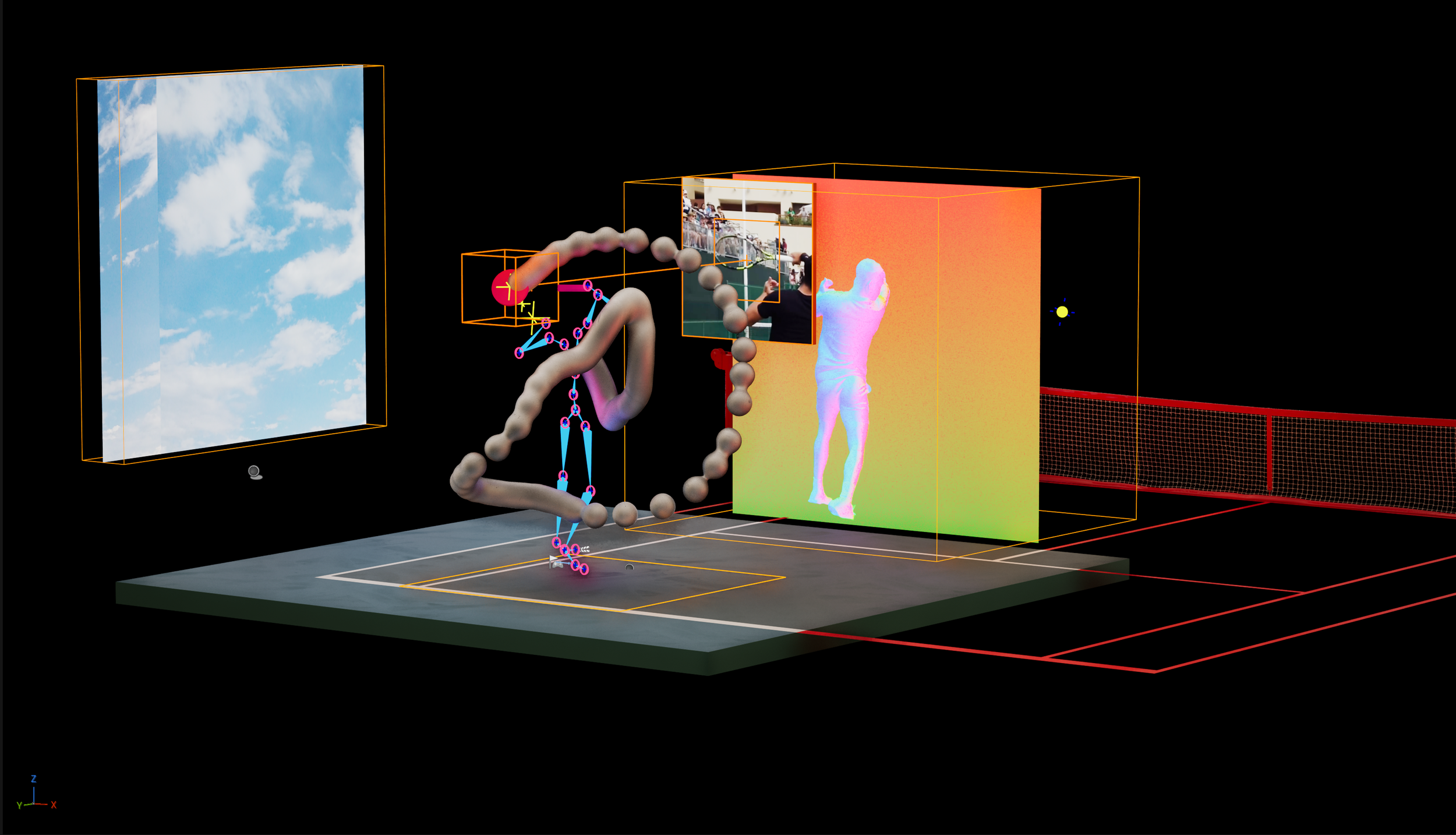
I wanted to understand how professionals actually swing their rackets. What does the racket path look like? How/when does the racket rotate? Where does it accelerate? What are the fundamental movements that make up a professional forehand?
I knew I was never going to suddenly swing like a professional, but I thought that understanding the fundamentals might give me a better starting point.
I started running footage of professional players through the motion capture software and was surprised by how good the results were. There was some cleanup needed, and I had to work out how to attach a racket to the digital skeleton, but suddenly I had something I could actually explore.
One of the interesting things about this approach is that normally when you watch a tennis player, you're looking at a 2D video from one particular viewpoint. You can see what the player is doing from that angle, but you don't necessarily understand what's happening in three-dimensional space.
I brought the captured motion into Unreal Engine, which is normally used for games, and that allowed me to navigate around the swing in real time. I could look at exactly the same movement from above, behind, underneath or from the side and really start to understand the shape of the motion.
That connected back to another idea from The Inner Game of Tennis: we're actually very good at learning by watching. You don't necessarily need to consciously understand every movement in order for your brain to start absorbing it.
So the idea became less about creating a perfect technical tennis tutorial and more about creating something I could repeatedly watch and explore, almost letting the movement sink in subconsciously.
Has visualising these swings changed what you consider a beautiful forehand?
Maybe not what I consider beautiful, but I think it’s made me appreciate the smaller details a lot more. When you slow the movement down and isolate it, you start noticing things like the weight shift, the position of the body and the path of the racket that are almost impossible to pick up in real time. I think I’m probably more interested in the individual character of a swing now, rather than whether it’s technically perfect.
Has this work affected how you watch matches now?
I do find myself focusing on one player sometimes, rather than following the ball, so you get more of a sense of their overall movement and timing. I’m definitely more aware of that now, and always on the lookout for interesting movements or little details that stand out.